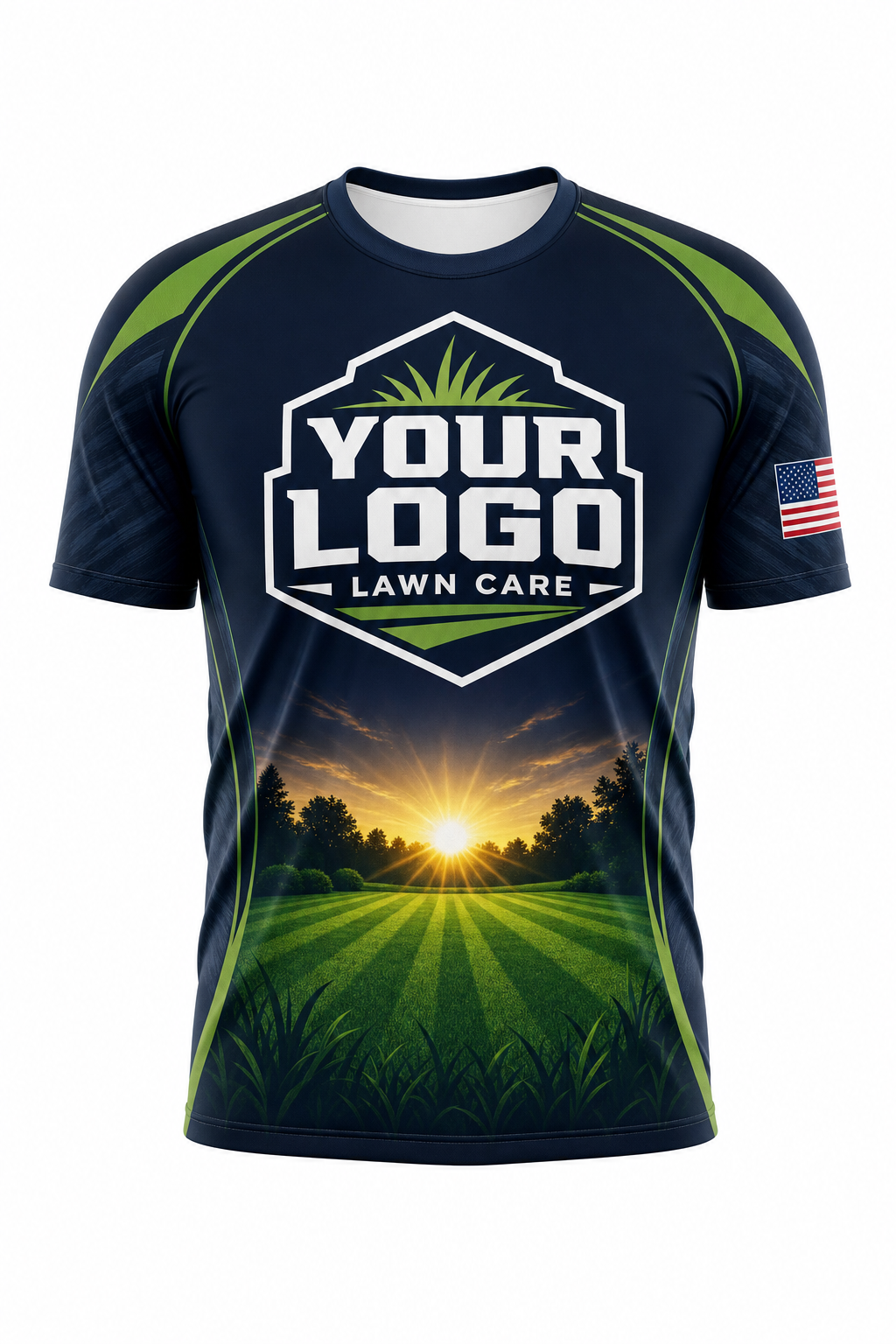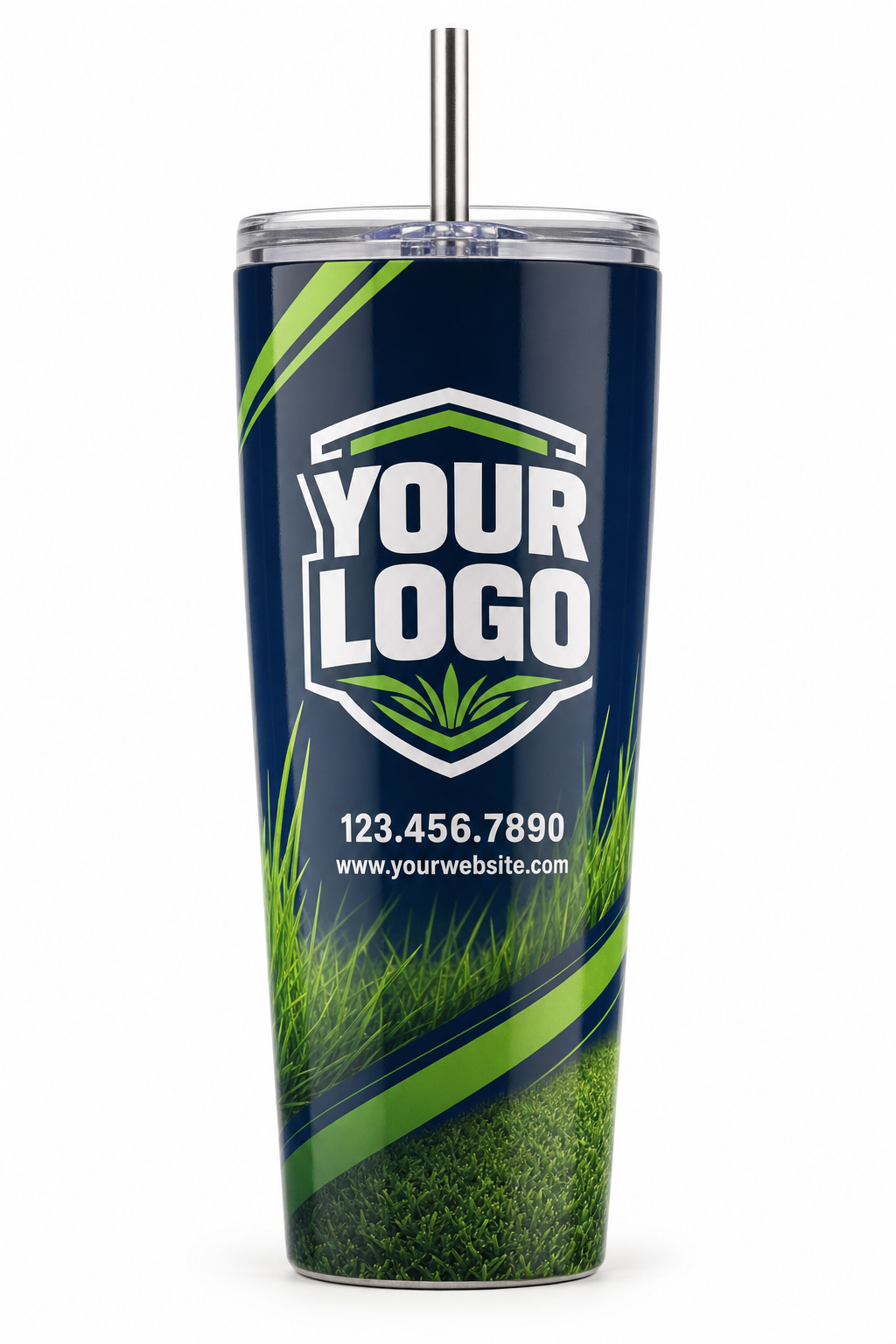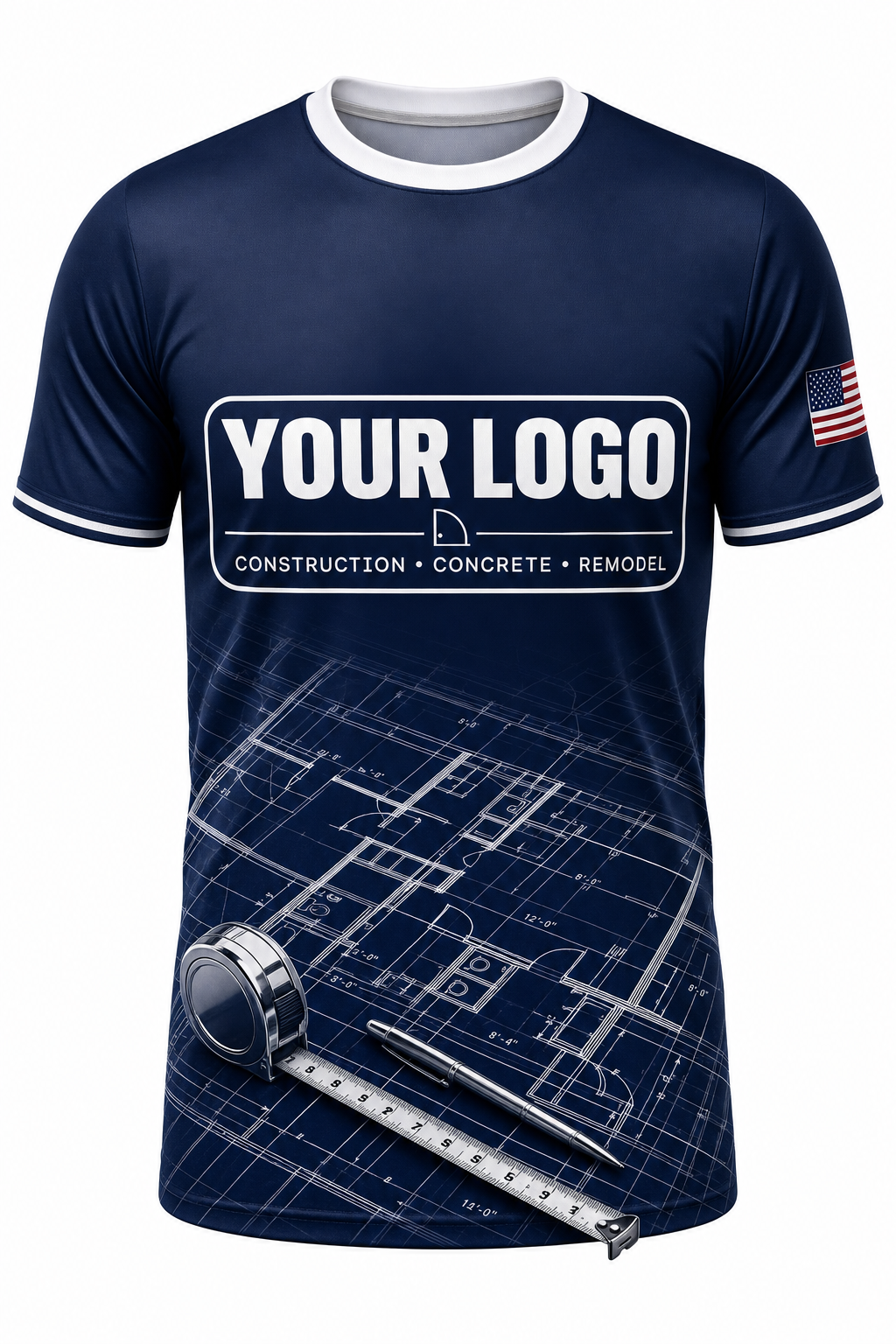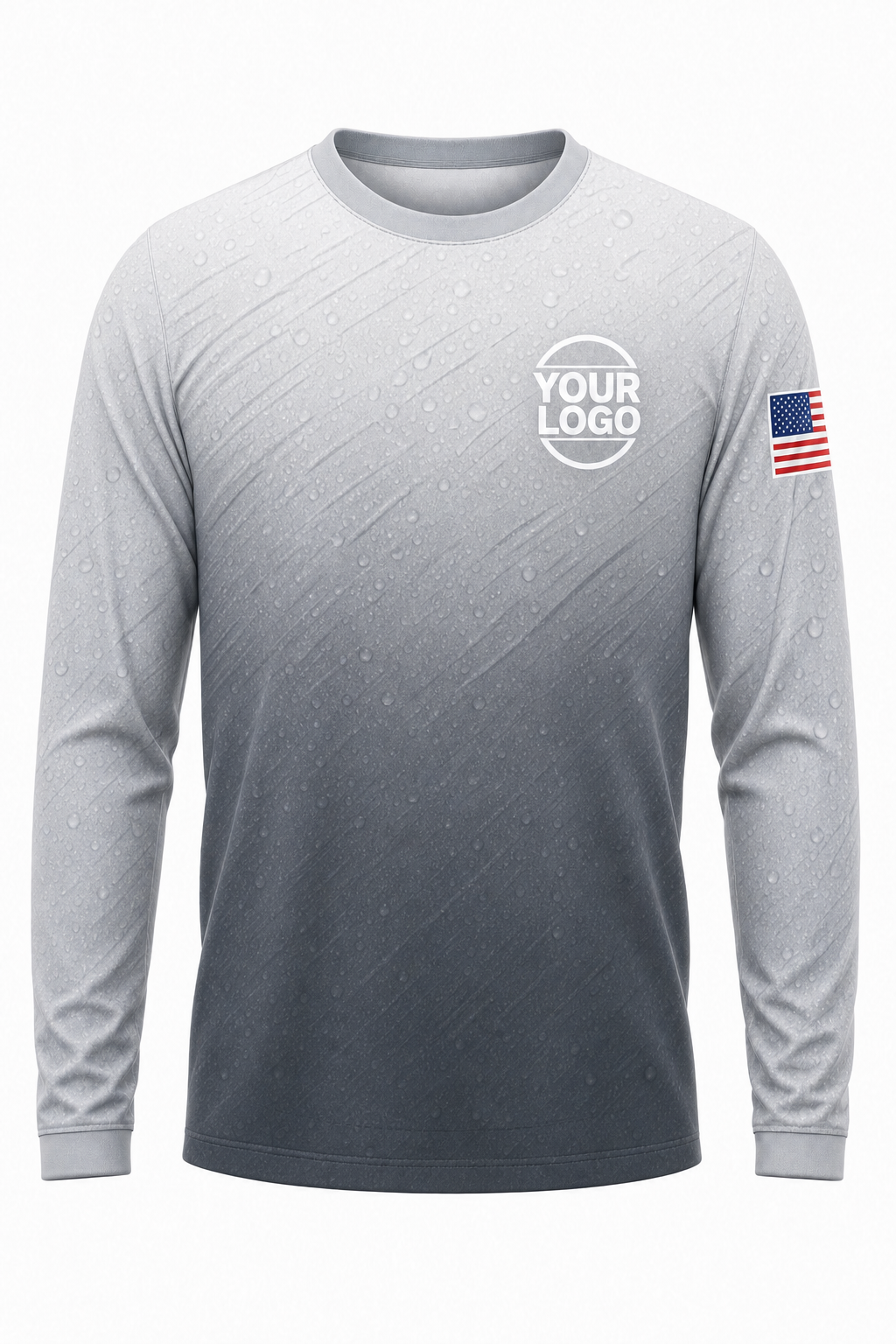

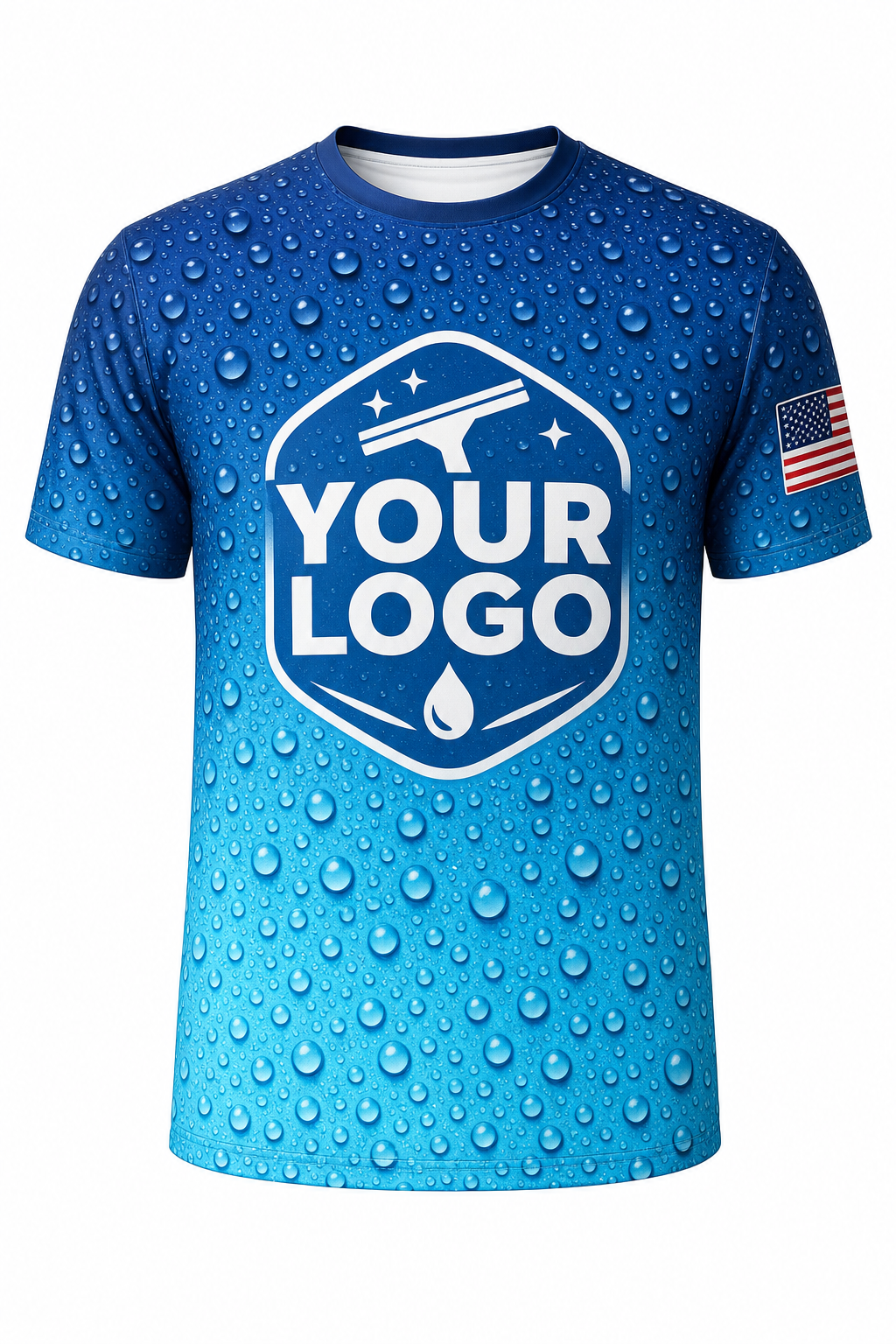
Window cleaning is one of the few trades where the customer watches you work the entire time — through the very thing you're cleaning. Storefront staff, office workers, homeowners: somebody has eyes on your crew at almost every stop. A matching, legible uniform does more for your image than a wrapped van, because the shirt is what stands two feet from the glass. This guide covers what actually matters when you buy crew shirts for squeegee work: fabric, print method, front-and-back layout, sizing, care, and how ordering works when you need six shirts, not six hundred.
What a Glass Route Does to a Shirt
Before comparing garments, be honest about the abuse a window cleaning shirt takes:
- Constant wet. Mop-and-squeegee work soaks cuffs, forearms and chest at every stop. Cotton absorbs the water and stays heavy and clammy; you want a fabric that sheds moisture and dries between jobs.
- Chemicals. Glass soap is mild, but hard-water stain removers, frame degreasers and the occasional bleach solution for screens and awnings are not. One splash leaves a permanent pale blotch on most dyed cotton.
- Sun from two directions. You spend the day facing reflective glass, often on a ladder or lift with zero shade. Direct sun plus reflection is a double dose on your skin and on the fabric's color.
- Abrasion. Holster belts, ladder rungs, harness straps and window sills rub the same spots all day. A chest or back print takes that friction directly.
A shirt that can't handle all four ends up faded, cracked and blotched — which reads as sloppy to exactly the customers you're trying to win as repeat route work.
Fabric: Lightweight Polyester, Wicking, UPF 50+
The fabric checklist for squeegee work is short and non-negotiable. Every shirt in our window washing collection is built to it:
- Moisture-wicking polyester. Pulls water and sweat off the skin and dries fast, so a soaked forearm at the 9 a.m. storefront isn't still damp at the 1 p.m. office job.
- Lightweight. Overhead pole work and ladder climbs all day mean every ounce counts. Heavy cotton drags; light polyester doesn't.
- UPF 50+. Built-in sun protection matters more in this trade than almost any other, because reflected light off glass hits you from angles sunscreen routines miss.
- Chemical and bleach resistance. The dye-sublimated fabric shrugs off splashes that would permanently spot ordinary dyed garments. A stray shot of bleach solution doesn't leave a mark.


Lightweight wicking polyester, printed edge to edge. Same fabric spec across every design.
Dye-Sublimation vs Screen Print vs Embroidery
How the branding gets onto the shirt matters as much as the shirt itself. Screen printing lays a layer of ink on top of the fabric; that layer flexes, cracks and eventually peels under daily stretching and route-frequency washing. Embroidery is durable but limited to a small patch, adds a stiff panel that can chafe under a harness strap, and holds water. Dye-sublimation is different: the dye is bonded into the polyester fiber itself at high heat, so there is no layer sitting on the surface to crack, peel or fade — and it can cover the entire garment, front, back and sleeves.
| Factor | Dye-sublimation | Screen print | Embroidery |
|---|---|---|---|
| How it attaches | Dye bonded into the fiber | Ink layer on top of fabric | Thread stitched through fabric |
| Wash-heavy route durability | Designed to resist cracking, peels or fades | Cracks and fades over time | Holds up, but thread can snag |
| Bleach or chemical splash | Resistant — no blotching | Fabric around print stains | Fabric around patch stains |
| Print area | Entire garment | Limited panels | Small patch only |
| Feel on skin | Nothing to feel — it's the fabric | Plastic-like panel | Stiff backing, holds water |
For a trade defined by water, chemicals and sun, full-garment dye-sublimation is the only method where the branding lasts as long as the shirt.
What Goes on the Front, the Back and the Sleeves
Think of the shirt as two signs. The front is the close-range sign: logo on the left chest, company name, maybe the tech's first name. Keep it clean and readable at handshake distance — that's what the customer sees when your tech knocks on the door or walks the storefront with a quote.
The back is the billboard. While your tech is up a ladder or working a pole for forty minutes, the back of the shirt is the only thing the street sees. Put the company name large, the phone number big enough to read from the sidewalk, and a short services line — for example: Window Cleaning • Gutter Clearing • Pressure Washing. Route work grows on neighbors watching you work; make the back do the selling. Sleeves are good real estate for a website or a repeated phone number.
You don't need to figure out the layout yourself. Send your logo, company name, phone number and services list, and our designers set up the full layout free, with a digital mockup delivered within 24 hours and unlimited revisions until you're happy. Nothing goes to production until you approve it. If you already have print-ready art, upload it straight onto the your-design custom uniform instead.
Sizing for Real Work
These shirts are cut in a US athletic fit, and they run fitted. That's good for pole work — no loose fabric flapping into wet glass — but it means you should size deliberately. If a tech is between sizes, or layers a hoodie over the shirt on cold mornings, or wears a harness for high work, go one size up. The range runs S–5XL, so it covers the whole crew, but measure a shirt that fits well and compare it against the size chart before you order.
One more reason to get this right the first time: every garment is made to order for your company, so returns cover manufacturing defects, not size changes. Collect actual sizes from your crew — don't guess from memory.
The Crew Kit, Care and Ordering
A working window cleaning kit usually isn't just t-shirts:
- T-shirts — the summer volume workhorse.
- Long sleeves — UPF 50+ coverage on the forearms you'd otherwise be re-sunscreening between stops.
- Polos — for estimates, commercial bid walkthroughs and property-manager meetings.
- Sweatshirts, hoodies and zip hoodies — cold-morning routes; the zip hoodie comes off mid-route without pulling anything over your head.
- Tank tops — hot-climate residential routes.
- Matching 20 oz or 40 oz insulated tumblers — route hydration that matches the shirts on the truck seat.
Everything above prints in the same design, so the crew matches year-round — browse the full catalog to mix garments in one order. Care is simple: wash cold, tumble low or hang dry. Because the print is part of the fiber, there's no inside-out babying, no fading and no cracking; the fabric dries overnight, so three shirts per tech comfortably runs a full week.
Ordering takes four steps — the full walkthrough is on the how-to-order page:
- Pick your garments and sizes. There's no minimum order — one test shirt is fine.
- Send your logo, company name, phone and services. Designers do the layout free.
- Approve your free digital mockup, delivered within 24 hours, with unlimited revisions.
- Production runs 3–5 business days after approval, and delivery takes 7–15 days.
Crew discounts apply automatically at checkout: 5% off at 5+ items, 10% off at 10+, 15% off at 15+. Orders of 5+ items ship free to any country; smaller orders ship standard at $5.99 to the US, Canada, UK, Australia and New Zealand, or $9.99 flat across the EU. The store also runs in English and eight EU languages if part of your crew prefers to order in their own language.
Popular Window Cleaning Designs


FAQ
Is there a minimum order?
No. You can order a single shirt to test the fabric and print before outfitting the crew. Discounts start automatically at 5 items, which is where free worldwide shipping kicks in too.
Will bleach or restoration chemicals ruin the print?
No. The print is dye-sublimated into the polyester fiber rather than sitting on top of it, and the fabric is chemical and bleach resistant. Splashes from screen-cleaning solutions or hard-water removers won't blotch or fade the design.
How long until my crew is wearing the shirts?
You'll have a free digital mockup within 24 hours of sending your details. After you approve it, production takes 3–5 business days and delivery takes 7–15 days — so plan on roughly two to three weeks door to door.
What if a shirt arrives defective or doesn't fit?
Manufacturing defects are covered by a 14-day remake or refund. Because every piece is made to order, size preference isn't a defect — so check the athletic, fitted cut against the size chart and your crew's real measurements before ordering.
Ready to put your crew in shirts that outlast the route? Start with the window washing collection, pick your garments, and send over your logo and details — you'll see a free mockup within 24 hours, and nothing prints until you approve it. No minimum order, free design work, and crew discounts applied automatically at checkout.
Related guides: print methods compared (all-over print vs 2D vs embroidery) · best uniforms by city & climate